Learn lots, get smart

Diplomas

My first day of school was a drama. I was just a few years old and it was the morning that my dad was to take me to the Gilchrist Nursery School.

The school was run by a woman named Carol Gilchrist who started the first nursery or preschool in the county. She was important locally due to the early education programs she started and for her involvement in the public school system. Perhaps only hours later I would develop a bond with her and the other staff at the school and in the future look forward to each day’s attendance.

But on that first day, it was war. War between little, terrified Aaron and his big, frustrated parents. I still remember standing in our dining room, crying like crazy, scared out of my sneakers and refusing to cooperate or do anything useful.

My mom was trying to head out to her job as a teacher and my uber-patient stay-at-home-dad had exceeded his monthly patience allotment. He suggested that perhaps a baseball bat would give me something to really cry about. At that moment I would have preferred the bat over going to school.

The start of anything new, particularly to a kid, can be scary. No matter our age or the experiences we’ve had, change and the unknown can give us a shake. Each new school experience was no exception for me. When I look back on my years of formal education I am frustrated over the difficult times and have gratitude for the good times and great teachers.

Getting started that first day was really tough, but all of my other memories of nursery school are good ones.

BuildingBlocks

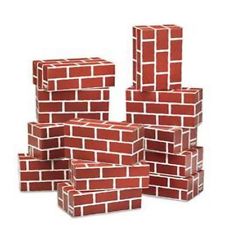
For example, the nursery school had these huge, to me at least, red cardboard building bricks. They had a red design on them that made them look like bricks. They were large enough that we could build forts that were big enough for several kids to play inside. I had a lot of fun with those. And a lot of fun busting down our creations.

Another strong memory I have is of Mrs. Gilchrist’s kitchen, in the living quarters above the school. I may have the details wrong, but I believe it was her daughter who had travelled and gotten a blowfish light fixture.

No, that wasn’t a typo. It was an actual preserved blowfish in its fully blown-up glory, hung from the kitchen ceiling, with a light bulb inside. We were once taken upstairs to see the fish light and boy was I impressed. And freaked out. But mostly impressed.

Another fun thing we did in nursery school was learn how to use the telephone. To this day I hate to talk on the phone. But back then using the phone was a grown up thing to do and was fascinating. For the lesson many real telephones were brought in and set up on a table. Someone from the phone company was there to connect the phones together so they really worked, without being on the real phone lines.

For we kids it was just fun, but in hindsight I realize the point was to get us to memorize our phone number, parents names and our address. And to know how to properly use the phone in an emergency. But it was such a practical and fun experience that we didn’t know we were learning. Which is probably the highest compliment to a teacher: to learn without the effort of learning.

The next major milestone on my educational journey was kindergarten. This was at the town’s public school, about six miles from my country home. It was my first time to ride a school bus as well.

We lived next to a drive-in restaurant called The Country Drive-In. It was one of those standard drive-up joints that had bellhops and served hot dogs, hamburgers, fries and drinks. The bus would pick up a few area kids from the parking lot.

Our family was friends with the owners of The Drive-Inn, Ken and Marge Zantello. I remember going to the bus stop that first day and Mr. Zantello was hanging around with the kids (his daughter, Stacey, was my age and starting school as well). Mr. Zantello loved kids and was great fun (nobody could do a better Donald Duck impression – and make us giggle until we overheated).

On the side of the restaurant was a menu board of what the Zantellos had available. I pointed to the sign and told Mr. Zantello: “When I come home tonight I’m going to be able to read that sign.”

That’s how optimistic and excited I was about school and learning! That story remains a funny family story.

Of course, I didn’t come home from my half-day kindergarten class with the ability to read, that would come later. But the excitement and hope of school was by that time fixed in me.

Some years later the bus routes changed as well as the bus stop location. Instead of getting on at the Country Drive-In, I would get on directly across the street from my house, in the driveway of Dr. John Zettelmaier.

Dr. Zettelmaier was a local who had grown up on the farm adjacent to where he then lived. He’d gone to my school. He’d gone to college for his undergrad in nearby Kalamazoo and later got his medical degree from Michigan State University.

He was a real character and I remember many a wintry morning sitting in his car with his kids, waiting for the bus. When it was time to get out he would implore all of us with his mantra: “Learn lots, get smart.”

Especially as my junior high years took over, and school got harder, and the stresses of growing up took hold, the phrase “Learn lots, get smart” just annoyed me. He made it sound so easy, like “smarts” were in a jug that you simply poured yummy knowledge into your head.

My day to day experiences with education were augmented by my parents. My dad was born to immigrants from Germany and essentially never went to school. All of his education came from his own initiative, from the on-the-job-of-life training. He had great trouble writing (he could only print) and struggled to read. However, he could do amazing math sums in his head. He was very smart and knew about the world and understood people.

My mom on the other hand has a lot of formal education. She has a Bachelor of Science degree in special education. Beyond that she has a dual Master’s degree in counseling and personnel management. Plus a permanent K-12 all-subjects teaching certificate. By the time she retired she had earned a Specialist in Education degree in communication. She also lectured at two state universities on special education topics.

So I had these two extreme examples of what education could be. And most would probably expect a lot of pressure from my mom to go to college, get a degree or degrees and have that as a primary focus of my youth.

That was so not the case. In fact, my mom had a solid view of what my educational future should be and I remember her talking about it, in different ways, all the time.

She believed in the value of a college education. She also believed in the education that one could gain at a community college. Or a vocational school. Or as part of an apprenticeship. She was about the learning and having skills and knowledge. She strongly believed that the delivery method was more or less inconsequential.

She ended her professional career as a career counselor at the county’s vocational school where juniors and seniors would spend a half day each day to learn a trade or job skill. These were things like data processing, commercial photography, construction, foods, marketing, clerical, retail, etc. Students would graduate with a high school diploma as well as real-world job skills.

But what was important for me was that college was not a given for my future. She and my dad both made it clear that they weren’t paying for college or education or anything after high school. From as far back as I can remember they told me that college would be a good thing, but if I wanted to go, I’d have to figure out how to pay for it – they wouldn’t be helping.

I’m sure that some of that reasoning was due to their own financial situation and not wanting to “promise” an education fund upon which they could not deliver. But the fact that “any” option after high school, either some type of school or training or a job, was okay with my parents, was very freeing.

So many of my contemporaries were feeling the pressure of picking a school, picking a major, etc. I simply didn’t have that stress. That left more time to dream about my first car.

In high school I struggled to find a post-graduation direction. I took numerous “interest inventories” and “career aptitude tests” and they all said I should be a forest ranger. While the outdoors and nature interested me, I didn’t see myself doing that kind of work.

I was also very interested in writing, printing and woodworking. I explored programs at the vocational school where my mom taught. I just didn’t know what I wanted to do. The curse of being a Pisces perhaps. And being young. And the bounty of so many options.

Fortunately my choice was more or less made clear. At the age of 16 I signed up for a media conference at a college an hour from home. It was led by one of the communications professors at the college, who was also the faculty advisor for the student newspaper. Guest lecturers included people from local TV, radio and newspaper outlets.

The conference had each of us do real-world work for print, TV and radio. We were given assignments and had to do them on a fictional deadline and we were then critiqued by the pros.

For the first time I felt like I was in my element. I was in a college atmosphere and the things I was being asked to do seemed natural and while challenging, easy. While I didn’t save my work nor remember the specifics of my assignments, I won favor with the professor for both my written work and for my radio news delivery. He thought I put words together well and that my “radio voice” sounded good (one exercise was to write and record a radio ad for one of the station’s sponsors. Mine for the Grand Valley Blood Program was actually used by the customer). He suggested that I apply to the school and if I did, he’d put in a good word for a paid position/scholarship on the college’s newspaper.

In short, I got in to that school (now Cornerstone University in Grand Rapids, Michigan) and with my own savings, financial aid, a student loan and the job as Production Editor for the Campus Herald, got started in college.

And surprise, surprise, my parents had saved some money for my education. Enough for a year’s tuition and room and board. That was a total surprise after all of those years of being told I’d have to work for it myself. It was one year’s worth, not the whole program, but a shocking gift when the time came.

I went to that college for a year and a half, the last half working part time as data analyst for Foremost Insurance Company. But when that job ended, I didn’t have an income and didn’t have money for college, so I moved back home, starting to think about going to the far cheaper state school (the much larger Western Michigan University in Kalamazoo, Michigan, where my mom had gone).

WMU Sprau TowerAfter several months I landed a job at the Kalamazoo Gazette newspaper. I started part time but after a few months went full time and was then eligible for their generous tuition reimbursement plan. I was then able to finish my degree (Bachelor of Science in political science with a minor in English/professional writing). There were a few years where my expenses exceeded the maximum that the paper said they’d pay, but they always paid my bills in full. About the only thing I had to pay for myself was parking.

How fortunate I was! Because I was working full time and going to school part time it ended up taking me a full eight years to earn my bachelor’s degree. I’ve often thought about how great it would have been to live on campus and just go to school full time, be involved in activities and do the degree on the “normal” schedule. I struggled in high school and couldn’t wait for the drama and stress to be over. But I really enjoyed college. I was fortunate throughout my entire college career to have only one, maybe two, professors I would say were bad. All of the rest were good to excellent and I enjoyed the experience.

To this day my mom argues that taking the slow route is better because you combine a formal education with practical work skills. The alternative is to graduate with a degree and no experience and then try to find a job. I can argue it both ways.

But the reality is, I did it slowly, ploddingly, I thought I’d never get done. But I did. Regardless of what that piece of paper has or has not done for my employability or earning potential or status, it is meaningful to me. It was hard work, it was worthwhile and if nothing else, it’s just for me.

Today, my formal education well behind me, I share my mom’s early views on education. But I think the decades to come will change the way everyone looks at education. I went to liberal arts colleges and I gained from the experience. But it’s not for everyone. I think with the focus on technology in the workplace, the need is going to be for focused training on very specific things.

For example, taking a history class can teach you a lot of things. Things you may be hard-pressed to quantify, but you learn, you gain background, the ability to add context to life’s situations. As my mom says “College teaches you how to learn and how to be a citizen in society.” I think she’s totally correct.

Those aren’t bad things, of course. But even someone who gets a scientific, mathematics or computer degree must learn the job for which they’ve trained, once they’re hired. I think it is the rare situation when someone graduates with any college degree, gets a job and blows out of the gates. Even physicians, with all of their years of training, must intern to learn the nuts-and-bolts day-to-day skills they need to practice.

The future I think will shift more weight to specific-topic courses, over short time periods, with great focus and intensity. Think of today’s computer certifications. They come from Microsoft, Adobe, Cisco, etc. An investment of a few thousand dollars, a few days or weeks, hard study and practice and an exam yields a worker who can in fact go into a job and be fully productive on the first day. Doing things. Bringing value. Earning an income that allows them to be independent.

I don’t think colleges and universities are going away, but I think they will change. They’re expensive and they take time. And education is not a one-time proposition. It never was, but I think the work world is making the distinction starker.

I’m nearly 50, have had a college degree for nearly half of those years and yet I have a good career that has, on paper, nothing to do with what I went to college for!

The skills that I have that are important for my job came from a variety of sources:

  • On the job training. I learned how to do tasks and jobs by being trained by my peers or supervisors.
  • Training provided by vendors. In several jobs we would get new equipment or new software or new methods and the company spearheading those changes trained me.
  • Focused classroom training. I went to training for Novel Netware 3.x and 4.x. I went to Unix/Solaris training. I went to Microsoft training for Visual Basic development. I went to an event called Script Camp for newspaper programmers to learn about automating text and image processing. Several years ago in Norfolk, Virginia I went to Tidewater Community College and took a class on SQL programming. In a few weeks I’ll be taking a short course at Salt Lake Community college in order to get ScrumMaster Certification.

That’s many types of learning. But all because I needed to learn and understand “x.” And “x” wasn’t a part of my previous education. In some cases the training didn’t even exist when I was at the university. The world changed and to adapt, I had to find a way to learn.

I think this idea of lifelong learning is important for young people to understand. I value all types and modes of learning and education. And even though I think targeted training is the future, I also firmly believe that a more traditional on-campus experience does teach a person to be independent, manage their own time and course load and work, and learn to function within a system (society).

I think we all need to understand that the graduation ceremony, any graduation or completion step during life, is not the end. It’s a closed chapter. Later there will be new things that need to be learned. We’ll use what we learned in earlier chapters to write future chapters.

Our interests will change. Jobs will change. There will be new information. We go from learning for a job to learning how to navigate retirement and old age. And whether you go sit in a class and listen to a lecture or read a study or some research, the learning never ends.

Yes, Dr. Zettelmaier, I think I’ve learned lots and gotten some smarts. But not enough. It will never be enough. I’ll always be thirsty.

Hmm, a cheeseburger with fries for $1.47…not bad.

From the library of…

LibraryOfThe picture here is of a sticky-back label in one of my books. Several decades ago I bought boxes of those custom-made stickers from the Lillian Vernon catalog. I had gotten old enough to earn a little money by mowing lawns and was able to make the occasional book purchase and those stickers provided proof that I was building my own library.

I don’t know where my love of books and reading originated. Neither of my parents were readers. But as far back as I can remember, I’ve had an interest in books. I’ve liked the way they look, smell and feel. I’ve wanted to read them and write them. They’ve always been a part of my life.

After my last move, to Utah, I came across the last box of From the Library of stickers. They were brown and curled up and no longer sticky. In fact, they’ve fallen out of most my remaining books. I took pause over keeping them as a memento. My final decision was to send them to the trash. But I still have some books that are marked with my name, reminders of a time when I wondered what my grownup life would be like.

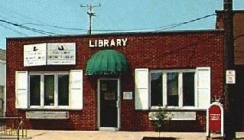
I grew up in rural Michigan, between two towns: very tiny Gobles and not much larger, Paw Paw. Gobles had a library that wasn’t much more than a closet. Most of the collection was of children’s books. Paw Paw had a more serious library. My small country school had an okay library, but its content was for school work, not for pleasure reading. At least that was my take at the time.

The Gobles Library. In my day, only the area to the left of the door was the library.

The Gobles Library. In my day, only the area to the left of the door was the library.

My mom and I decided that if we were to use a library it would be the one in Paw Paw, though using it would be a minor inconvenience. The Paw Paw library was in a beautiful century-old structure of stone and wood. Each trip to the library combined my love of books and wood into more than just a search for words.

The Carnegie Library in Paw Paw.

The Carnegie Library in Paw Paw.

My first few visits to the library were frustrating. My mom took me and wasn’t all that interested in the mission so she went shopping at the Ben Franklin discount store next door. But mom not being much of a shopper, I knew I didn’t have a lot of time to find a book.

I felt the time crunch to find something, but also enjoyed the process. I listened in on the dialog taking place at the librarian’s desk, central to the building. People would come in and ask for help answering all kinds of questions. I was fascinated and energized.

AllCreatures

One of the first books that I checked out of the library was All Creatures Great and Small which was extremely popular at the time. Everyone seemed to be reading it. I absolutely devoured that book while swallowed by my blue beanbag chair.

As I got older I imagined a grownup life where I had a house with a library. I envisioned a traditional library with paneled walls, cozy leather chairs and a fire. So far I haven’t gotten that library and maybe I never will. Today I’d still like to have that room, but it’s more important to have interesting and compelling words to read.

Today we have many easy options for reading material. Sadly we’ve lost Borders and Waldenbooks not to mention many local shops. But when I was a kid, the first proper bookstore I experienced was a Waldenbooks at the new Maple Hill Mall in Kalamazoo.

My Waldenbooks wasn’t very big but it was an oasis to me. The mall was practically a destination for us, we likely went once a week. More convenient than the library, I looked forward to getting my browsing fix on a regular basis at Waldenbooks.

It was at the Waldenbooks store where I started to buy books. It felt good to build a collection and have the books to look at. They were badges of accomplishment: I had purchased and read them and I was proud.

At the same time even a paperback was a big percentage of my earnings, so each purchase had to pay off with a good story. If I got a book that wasn’t enjoyable I would be so sad. This rarely happened, but it was my constant fear while shopping.

When my college years came I gained a different appreciation for my love of reading. I worked full time and went to school part time so I was busy. For the eight years it took to earn my degree, all of my reading effort was academic. Occasionally I’d try to read something for me but my mind would constantly interrupt to tell me I should be reading my Soviet political systems text. I lusted for the day when college would be behind me and I could read whatever, whenever.

After several moves I’ve thinned out my library of physical books. Considerably. I simply didn’t have the space and lost the energy to pack them. And since I am not a re-reader there is no logical reason to hold onto them.

It’s been more than a year now since I’ve read a non-digital book. It was a hard transition to digital, but one that I felt I needed to make. I still love the physical book and enjoy a long browse at Barnes & Noble. But the reality of what comprises a library has changed.

The Goodreads website has played a role in making the transition work. My childhood vision of having an impressive physical library may never be reality, but I can see the books that I’ve read by looking at my Goodreads shelves. And I can also research future reads and learn about reading options from my Goodreads associates (http://www.goodreads.com/review/list/1559344-aaron-kuehn?shelf=read).

Today the my interest in reading is not having a shelf to point to or a history of titles to remember, it’s excitement around what the next read may be. Will the next book be another one that sucks me in so deeply I don’t want to go to sleep? Will a new thought or idea or perspective be seeded because of a phrase or concept never-before considered? Will I be transported to a place that is rare and special and can only be experienced in my imagination?

The potential, the escape, the adventure, healing and recoup that comes from reading, those are the important things now.

From the library of Aaron Kuehn is a thing of the future, not of the past.

In Camp
FICTION

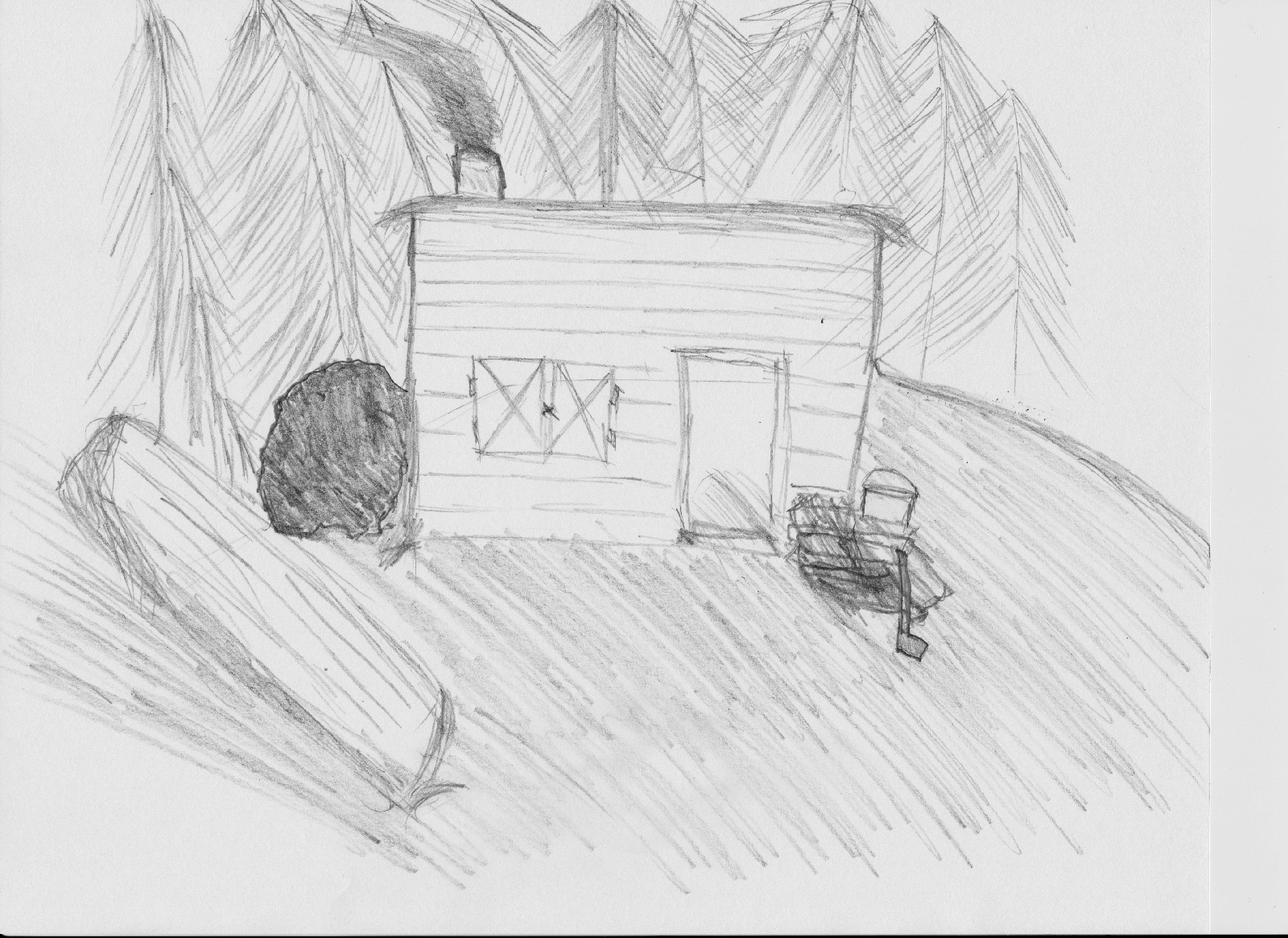
InCampI arrived in camp at around two in the afternoon.

I suppose calling it a camp might give you the wrong idea. Fifty years ago it may have been a camp. In fact it probably was a really nice one. But on that day it was remnants and shadows. Ideas of a camp long gone. Ghosts. Even though I was miles into the forest and had not seen another person for weeks, I could hear the conversations and stories of people. People doing camp work; cooking; telling lies around the fire.

At that moment it was an oasis. I had been lugging my come-along, overloaded with gear, for several weeks. The physical labor was a challenge, but the mental demands were even more onerous.

An old man had confided to me at a small-town gas station that this old cabin lie forgotten out here. But was he telling the truth? Or were his facts confused? And even if he had it all straight, who knew if it was still standing?

So while I was tired and sore and hungry from my journey, the sight of that rough structure restored me.

One might think my first impulse would have been to explore the cabin and camp remnants. Rather I sat myself down on a large tree that had been felled and dragged alongside the cabin decades before. I sat and surveyed my destination. The mountains and the trees and the sounds: in they soaked. The sun went between bright and soft, interrupted by puffy clouds. I closed my eyes and dreamt of being nowhere else.

The logical part of my mind told me that even though it was early in the day, I needed to get to work. There was no door on the cabin but the rest of it appeared sound. Perhaps it had been occasionally used by hikers and hunters and received some level of maintenance and repair over the years. I wanted to be able to rest under cover that night.

My next thought was of food. Water was flowing steadily in the nearby stream. I thought there may be fish to be caught and that would be easier and faster than having to hunt for meat. But my first action was to examine the cabin.

Even with the brightness of the day the cabin’s interior was dark. There was the opening that would be the doorway and next to that a large window opening. The window had no glass but a pair of hinged shutters that opened outward. Once I managed to get them open I found that the cabin was quite sound. It was dirty and filled with leaves and debris. But the wood stove, apart from being rusty, was in good order. And the galvanized chimney looked in very good condition, confirmation of my earlier thought that people had been periodically using the place. Cooking and heat would not be a problem.

The only other furnishing was an over-engineered and rugged sleeping platform. Fashioned from four large stumps of wood with hefty rough-hewn boards placed between them, covered with pine straw it would make for a plenty cozy place to drift off at night.

I decided that getting the cabin cleaned out was going to be my next activity. I figured that even if I did get a door fashioned by night, it would be makeshift at best. Shelter over my head, a fire, and a soft bed at that point were the luxuries I sought.

The cabin was situated on the edge of a large clearing or meadow, adjacent to the stream. The stream may be classified as a river, I’ve never been clear on the difference. It was probably a couple of feet deep, if not four, with sandy edges and plenty of rocks to provide cover for fish.

Behind the cabin just a few feet the forest resumed and closed in densely into the unknown. I had to only walk a few feet, with axe in hand, to cut a few fresh pine branches from which to make a sweeping tool. Calling it a broom would be an overstatement, but dense with green needles, it would do.

Before I put the broom to work I made several trips to remove the large piece of trash. Leaves, pine cones, twigs and branches were strewn everywhere. I suspect most were blown in by the wind, but surely some had been transported by creatures trying to take advantage of the shelter that the cabin provided.

Next up was the sweeping. The wind was stirring and I didn’t want to kick up a lot of dust, so I swept carefully. I started in the corner farthest from the door. Before I knew it the bare wood floor was looking back from every corner and I was hot, sweaty, covered in dust and sneezing with regularity.

I don’t know what time it was when I finished cleaning, but I was tired and while I did have some pangs of hunger, they were not strong. Rather than think of food, I turned my attention to the stove. A comfortable night’s sleep was quickly becoming a higher priority than a meal.

Once I opened the large cast-iron door of the stove I realized that my cleaning efforts should have started there. The fire box was as full as it could be with ashes. Just opening the door caused a big pile of ash to tumble out, cover my face and fill the air. The ashes would need to be shoveled out before any fire could be made or before I could ensure the chimney was clear.

I unpacked my shovel from the come-along and as carefully as possible, carried one scoop of ashes after another out of the building. I suppose it took about 20 minutes to get the ashes cleared out and learn that the chimney was in fine shape. But then I probably spent another 20 minutes re-sweeping the floor for the ash dust I had stirred.

It wasn’t yet cold, but I knew from the experiences of the past several days that it would cool sharply once the sun went into hiding behind the mountains. Around the old camp there was plenty of dry wood for the picking. Fortunately I wouldn’t have to chop or fell any fresh wood for several days. So I set about getting a fire going and stacking next to the cabin door a supply of wood.

With the fire going and plumes of grey smoke spilling up into the sky, I was ready to prepare the bed. I could feel the night moving in.

Several dozen big armfuls of pine straw carried from the forest floor were enough to give me inches of padding between my sleeping bag and the boards of the bed. I tested the cushion with my hands, afraid to lie down for fear I’d fall instantly to sleep.

Before I could sleep, I wanted to clean up. I headed to the river to wash up. It had been several days since my last splash off. After my hiking and cleaning the cabin I don’t know what a sight I must have been, but I felt like I’d shed another man by the time I had finished in the river.

Yes, having submerged myself in its cool, fast-moving water, I declared it a river.

I also learned while washing away the dirt and grime that the river was well-supplied with fish. I even had the boyish belief that, if fast enough, I could simply grab my dinner with my bare hands. I tried a few times and laughed at myself. I’m sure the creatures camouflaged in the forest were amused by the upright animal thrashing about and making strange noises in the water!

The better plan was to fashion a spear from a branch and in fact that successfully secured my dinner after about a dozen attempts. I cleaned the fish and, draped over a green limb, cooked it through the open door of the stove. Simple though it was, the fat flaky meat was a delicacy.

Fed and clean I regained my earlier position on the log outside the cabin. The stars were beginning to win their battle to light the sky. The moon, though not full, was bright and a few wispy clouds gave the sky a face.

I was tired, bone tired. But it was the good tired that comes from satisfying work. As I made my way into the doorless cabin I no longer heard the imagined voices of people from long forgotten camps. Now the only voices were those of the forest.

The camp had sent away the ghosts of the past and was making room for me, tomorrow’s ghost to a future traveler.


Grandma’s House

My grandparents’ house wasn’t just walls and floors and windows. It was a container of experiences, feelings, odors and memories.

And blankets, lots and lots of blankets.

To this day there’s something very cozy about sleeping in a cold room with the weight of many blankets lying on top of me.

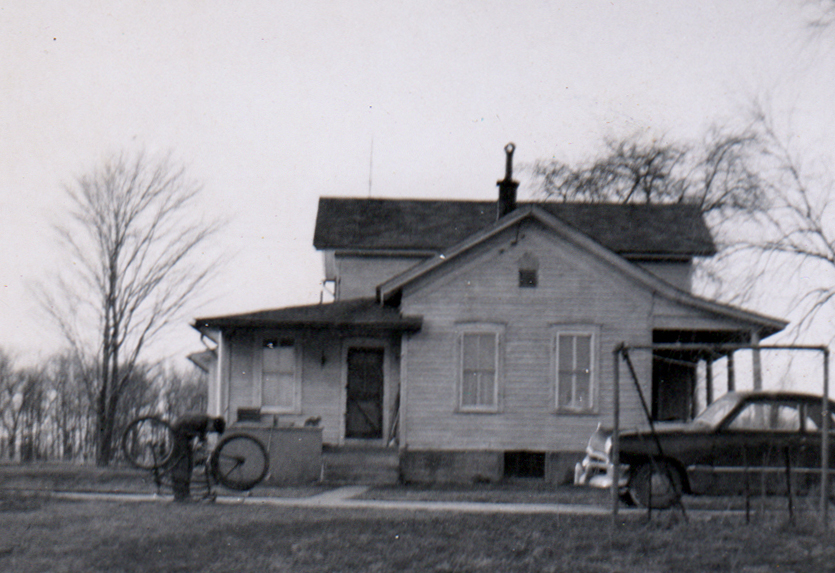
My grandparent’s house was an old farm house in rural Michigan. I’m told the original part of the house was put up in the late 1800s with later additions including a hand-dug “Michigan basement” (a dirt-floor basement with walls made of stones collected on the property).

Until a fire destroyed all but the exterior walls in the mid-1970s, the only heat came from a basement wood stove and its single large vent in the floor between the kitchen and dining room. This gravity heating system made for a toasty dining experience, but the bedrooms that were placed on the outer edges of the house and upstairs, were quite frosty in the cold seasons.

On the main floor there were two bedrooms referred to as the South Bedroom (grandma and grandpa’s) and the North Bedroom where I would sometimes sleep.

All of the beds had several layers of blankets and they were quite effective. I’ve always been a more hot than cold person. I suffer in the summer and relish fall and winter when my body finally feels like it has reached equilibrium.

In the chilled North Bedroom, with my cold nose poking out from under a pile of blankets and quilts, I had the best dreams of my life. Most of those boyhood dreams involved some far-north adventure complete with a blizzard, a husky and a cabin.

I suppose every house has an odor, pleasant or not. I’ve heard from countless people about their memories of the way their grandparent’s houses smelled. That’s not unique. My memories are unique in that my grandparents were hoarders, before that diagnosis existed. So the fragrance I remember is of cardboard. Various kinds and thicknesses of cardboard. Old cardboard. Wet and dry cardboard. It created quite the aroma. It wasn’t necessarily bad, but it was one that I’ve haven’t since encountered.

Before the fire I was fascinated by a dimmer switch that controlled the overhead light in the dining room. It was one of those round knobs that you first pushed in and then rotated to adjust the intensity of the light. To a little boy that was like a rocket ship control! I would walk by and turn it just a little bit, trying to change the lighting without getting the adults upset. I’d usually get a stern look from my mom or worse. I got many hours of play out of that simple dimmer control.

My mom was one of the last of a class to be educated in a rural one-room schoolhouse. As the old schoolhouses closed my grandfather would get the slate chalk boards. One of those slate boards hung in the dining room and kept my cousins and I occupied while the adults discussed their troubles. Grandpa had given my parents one of the boards as well and it hung in our basement and was by and large in my own play area. I still have our slate board, but the one at grandma’s house was different because it was so in the open and in the adults’ space.

I would draw terrible pictures and enjoy inhaling the chalk dust. In fact I loved chalk dust so much I drew with much more intensity than necessary just to get a heavy coating on the board. Then I would load up the eraser and take it outside to beat it against the side of the barn and enjoy the chalk dust cloud. I’m sure that has done something evil to my health, but at the time nobody gave it a thought.

I also remember the large claw-foot dining room table. It was enormous and very ornate. For some years I was able to walk around under it. In fact during the fire the entire roof of the house collapsed on top of that table and the table did not break nor burn.

Even when I was too tall to take walks under that table I would spend considerable time studying the claw feet. I didn’t realize it at the time but the large knuckles and nails and feathers on those claw feet probably were my earliest study of woodworking.

The old house also had a root cellar. While the house had electricity all comers were instilled with a mortal fear should they use or waste it. Heaven help you if you did something to cause the “light bill” to be increased by even a penny! So even in modern days, with a refrigerator and a couple of large freezers to keep the products of their large gardens, the root cellar was an important part of their life.

I was terrified of the root cellar. It was cold and damp and dark. The potatoes had eyes growing out like the tentacles of some evil underground devil ready to wrap around the devour me. No, grandma, you can go get the potatoes yourself, I’ll stand back here and scream for help if you are attacked by a rogue spud.

Many people think of their grandmother as being the best cook in the world. I don’t have any such illusions. My grandmother was of southern heritage and as such cooked with large amounts of animal fats and had a relatively small repertoire of kitchen creations.

To be sure I had a strong appreciation for some of her work, though. Tops was her banana or pumpkin bread. I don’t know what made it so special to me but I loved it and she knew it. Even as an adult she would make me my own loaf and wrap it within an inch of its life with aluminum foil and recycled bread bags.

Oh, and the bread bags. And plastic containers. A stranger surveying the kitchen may have imagined that grandma was a frugal recycler. And while my grandparents were tight with a buck, the collection of used plastic material was piled so thick on the counters you couldn’t tell from what material the counters were made. It used to irritate me to no end when grandma would wash and dry bread bags, cottage cheese and butter tubs. Sure, have three to five copies of each to store your leftovers, but 11,485 old bread bags was perhaps to the side of excess. Any person who worked up the nerve to suggest to grandma that maybe some of the bags from the 1930s were superfluous got a “Well….” and a stern look that insinuated logic would not prevail.

I also remember the sound of the wood furnace being stoked in the basement. The house was normally very quiet but when the furnace was being tended, the noise telegraphed to nearly every corner. For some reason the sound of ashes being cleared and logs being adjusted was different during the day than at night. I would be dozing nicely in the North Bedroom when someone would be working the furnace and I would feel minor pangs of guilt for not helping out. But I was getting no benefit from the heat so why bother?

Besides, the basement was next to that root cellar, and who knew what those potatoes did in the night!

Eating in public #6
Tipping calculations

I recently gave serious consideration over how much to tip our waitress at one of our favorite sushi joints.

Most people, when thinking about tipping, are concerned with the percentages.

“How much should I tip?”  debates ensue over the quality of service, the accuracy of the order, the class of the joint and so on.

This time I had to figure the amount based on friendliness. That’s a hard one to compute. The waitress technically did what she needed to do, but she wasn’t friendly and appeared to detest being in that space and time vector.

I generally start out assuming that a server deserves 20%. I deduct based on problems encountered during the dining experience. But is apathy really a problem? We were going to eat there and enjoy great food regardless of this lady’s enthusiasm quotient. But each time she came to our table to inquire about the food or to refill our water glasses my wife and I exchanged the “What’s up with her?” glance.

Notice that she came back to make sure the food was good and made sure we never ran out of water. She did her job. But I think she would rather have been de-pilling her sweaters.

On the other side of the thought, if the server is really friendly and happy and smart, but the food is lousy and full of flies, they still might get the 20% out of me. A lot goes into the tipping calculation, but being a nice person can trump a lot of other ills.

But that doesn’t mean you can sneeze on my burger or drop ear wax into my soup. There are limits.

In my opinion most of the problems that take place in a public eating establishment are related to something that happened in the kitchen. Yes, I know, if the server doesn’t refill my drink, doesn’t come back to make sure I’m enjoying the meatloaf even though I ordered the fish-n-chips…those are things upon which the server might want to improve. But usually the fault lies elsewhere. That is important to consider when doing the tipping calculation. I think the tip is for the server (and this is often shared with the ancillary dining room staff) and should reflect the quality of their work. If the steak is raw or a box of Morton ended up in the soup, the fault lies with the white-smocked ones hanging out in the stainless steel forest, not the one with the order pad and apron.

I’ve always been a generous tipper. I grew up next to a restaurant and my family ate out often. So I’ve spent a lot of time around service personnel. But I think my tendency to tip on the high end comes from my appreciation for the work that goes into the job.

I have a lot of sympathy for wait staff. They’re on their feet for a long time. They’re constantly in motion. If they so much as sit down for a second, the clientele looks at them with accusations of lazy in their eyes. They have to be quick-minded, able to deal with all of the whackos that tend to inhabit the dining public and they have to know everything on the menu. And not just what’s on the menu, but what’s in the kitchen, what the cook on duty will or will not do for a customer and whether or not they turned the “OPEN” sign on.

Oh, and they’d better not get sick or plan to retire, because they’re probably not getting any benefits whatsoever. Apart from free cottage cheese. All they can eat. After the expiration date of course.

They are the front line of the business. Regardless of the source of the customer’s angst, it’s the server that gets both barrels. But how much pull do they have over how the business operates, how big the slice of cow is or how much mode is in the a la mode? I’m guessing not much.

They show up, they hussle, they keep track of orders, they work with computer terminals that always seem to have keys missing or mis-labeled, they have to smell dozens of kinds of food all day and clean up after your drippy-nose kids all while banking a sub-minimum wage. Oh, and they have to do side work like filling the salt and pepper shakers, making sure each of 29 kinds of sweetener packet is available at each table and spreading ice-melt on the sidewalk.

Being a server is hard work. Even when they just do the bare minimum, it’s more work than this desk-jockey code-writer is interested in doing. Call me lazy if you must, but I am in awe of how hard they work. Hard work they do to serve me. And you. Regardless of the type of day they’re having. Regardless of the type of day we’re having. Regardless of how ornery Mel is being toward them.

No, I’ve never been a waiter myself.

Nor a waitress.

I’m not biased.

“Miss, there’s a fly in my soup.”

Maybe I’ll make that 21%.

Workplace lessons from my dad

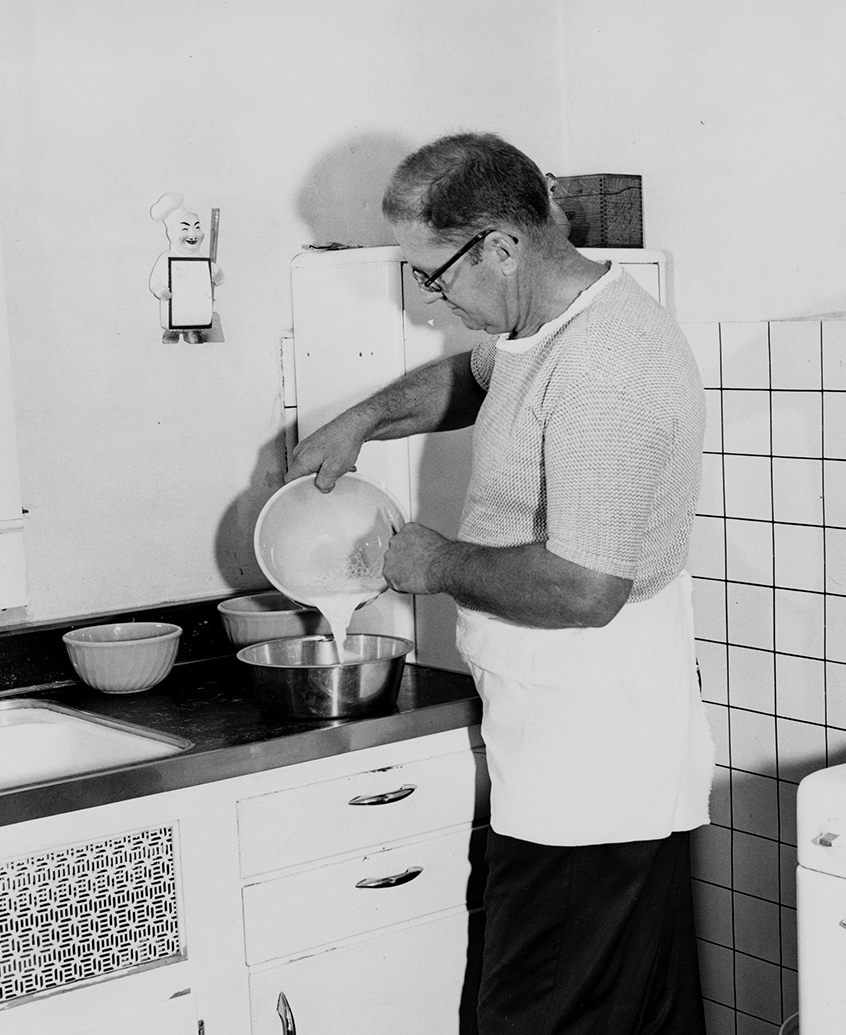
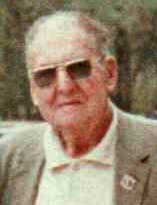
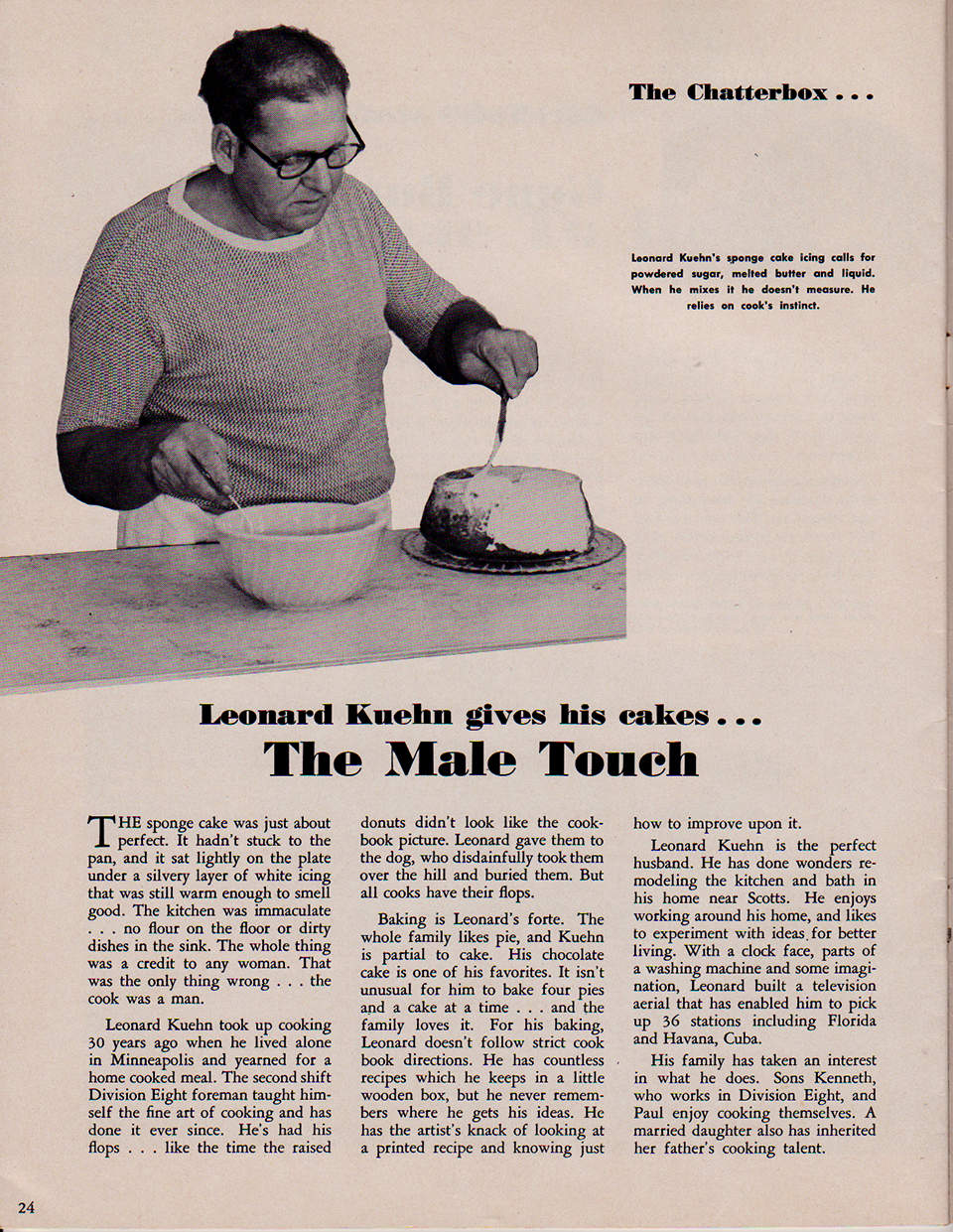
My dad, Leonard Kuehn

“How much money do you make?”

Yes, you read that correctly. How much money do you make? Send me an email with the amount.

You can tell me in terms of hourly, weekly, annually. However you like. Before taxes, if you please.

I suspect that I shall get no emails containing such information. And if on some wild chance that I do, they’ll probably be bogus.

If you asked me to do the same, I’d refuse.

Do you know why you are reluctant to tell people your earnings? I am because of one of the many workplace lessons my dad taught me.

Our attitudes about our earnings are complicated. My wife is a native of Romania and in that country people talk openly about their earnings. So I suspect the way people think about income is not universal.

I think the more one makes, the more reluctant one is to spill the beans. Oddly, the further back in time you reference, the less shy we are about giving up the digits. For example, when I started working at the Kalamazoo Gazette newspaper in Kalamazoo, Michigan, I was hired on for 29.5 hours a week at $3.72 an hour. The federal minimum wage at the time was $3.35, so I was feeling pretty good. I had only worked there for a few months when the newspaper celebrated its 150th anniversary and the publisher passed out raises in recognition of that fact. That put me at $3.90 an hour. I was ready to start shopping for that Mustang GT!

But my current salary? I’d rather not say.

Almost all of my views on compensation, saving and retirement come courtesy of my dad. What he taught me, both emphatically and by simple example, left a deep imprint on me and I think about him and his life almost daily.  That’s probably not so unique. We’re all shaped by the people who raised us. But I do believe my perspective comes from a pretty unique place.

In order for you to understand, let me tell you about my dad.

My dad was born to German immigrants in 1907. He attended public school for just a couple of years and since he didn’t speak English, he dropped out. He essentially had no formal education. If you asked him what grade he got to he couldn’t say for sure. His learning came by way of his hands, sweat and street smarts.

He ran away from home when he was 13 years old and rode the rails. He was a hobo. A bum. He went many places on the trains and worked odd jobs in various cities in order to eat.

He eventually arrived in Kalamazoo, Michigan. There he had jobs as an engine tester for Buick, as a laborer in an asbestos plant and finally at a parchment paper-making plant. Over the years he had many jobs with the same company, even as it was bought and sold numerous times.

By the time the Great Depression came around he was a supervisor and during that horrible period, he never lost his job.

My dad was too young to fight in WWI; he was too old for WWII.

He married and had a family: one daughter, two sons. He divorced after over 30 years of marriage.

In 1966 he married a woman 35 years his junior.

She was younger than his own youngest child.

I’ll give you a moment to ponder that.

He was 59, she was 24.

He was older than her parents.

Several months later, his wife pregnant with yours truly, and just shy of his 60th birthday, he was laid off from the paper plant. By that time he was the plant manager at a facility that made plastic drinking cups. They made the kind of cups you often see at a picnic. His world came crashing down around him. He had been earning a very good salary for several years. Now he was newly married, baby on the way, and no job.

He had worked for several decades for the same “family” company. He had known the owners personally. He thought he was a star employee…there never was any hint of anything bad on the horizon. He felt like his generous pension and Social Security benefits would provide an excellent retirement.

Now he, along with many other similarly-aged men, had been cut loose. The company essentially didn’t want to pay full pension benefits to those men. It was a cost-saving measure. Today they might go to court and there are stronger laws to help prevent such actions. In the late 1960s, and being in management and not protected by a union, these men had little to no recourse.

The older I get and the more experiences I have, the more I appreciate the terror that must have gone through my dad’s mind. Fortunately he had a young wife who was just finishing college and starting her career. He had a safety net.

So in 1966 my dad decided to be a house-husband: he would stay home and raise me while my mom went off to work.

I never heard my dad say a bad thing about his former employer. His two sons from his first marriage worked for, and decades later retired from, the same company.

He did talk about his experiences, though. He talked about his “career”, though he never would have called it that. His constant lesson was “Don’t count on the company to take care of you.” But he never said it with malice directed towards the company. At least in my hearing.

Sure, he had been mistreated. But plenty of companies simply went out of business before paying pensions. Or some manager made a mistake and a business went bust. Anything could happen. There had been the Great Depression and while he worked straight through, it had been his job to let men go during that time. He knew bad things happen but he wasn’t the type to blame. Rather he was the type to take inventory and look for the next path.

Decades after the Great Depression he was still bothered by the faces of those he had terminated. If he hadn’t let them go, it would have been his own job lost. But nonetheless, he fully appreciated how fortunate he had been.

One of the great emotional struggles for my dad came in the mid-1970s when the three of us were at the mall. A man and his wife came up to us and it turned out that this guy had worked for my dad during the Great Depression…and my dad had let him go. I don’t  remember the man’s face, but I remember his words: “Why did you let me go…I had a family?”

I understood what was going on. Not as much as I now do of course. It sucked the breath out of my dad that day…and for a long time after.

So unlike those I grew up with, I didn’t have a dad who was starting his working life, trying to figure it all out. Instead I grew up with a dad who had sixty years of living under his belt. He knew life before telephones, electricity, automobiles and indoor plumbing were commonplace. He lived to age 87 and never flew in an airplane. I learned from the man that such a life created.

Dad taught me that no matter how good the employer, no matter how excellent the benefits, you’ve got to make your own plan. He wasn’t teaching distrust, rather wariness. He was a big believer in personal responsibility.

In those days there weren’t IRAs or 401(k) savings plans. And stock or mutual fund investing was a deep mystery and not nearly as accessible as today. But he had learned the hard, very hard, way that you can’t trust someone else to take care of you. They may try, they may say they will, they may have good intentions or ill, but you’ve still got to be responsible for yourself.

Even as a young child I worried about making a living. Would I get a job? Would I earn enough to be independent? Would I have a good retirement? I still think about it on a regular basis. No matter how much I save, will it be “ready” when I am? Will I outlive it?

My dad also prepared me to do what the boss told me to do. I’m not saying I’m a perfect employee. Not even close! But my goal is to do what my manager wants me to do. Even if I don’t agree with nor like what I’m asked to do, I try my best to do it.

I think my dad’s belief was that if you are a good employee, are agreeable, have a good attitude about work and foster a partnership with the boss, when it comes time to either let people go or move people up, you’ll be in a better position. I spent a few years as a department supervisor and while I learned that I am not cut out to manage people, I also saw the wisdom of my dad’s example.

If you’re the type to complain or resist or challenge all the time, without really good reason, it’s just instinct for the boss to not have the best plan for you. If workplace changes send you on the offensive, how do you think your manager is going to view you?

I’ve had some pretty good managers. I’ve highly respected the managers who could do my job. If I dropped dead on Monday, those bosses who could simply do my work earned my respect. They knew what was involved so they appreciated what I did and understood the effort involved. And they could also look at my work and fairly and completely evaluate it.

I also had some managers who had no clue what I did but admitted that fact. They knew they needed done the work that I was doing but also knew they didn’t know how to do it. I respected them for knowing what was important and trusting me to do it. It was also important that they evaluated me based upon my level of success and the reports they received from my “customers.”

Managers that have not garnered my respect are those who believe that by simple fact of their position they are imparted with knowledge and experience related to my work. Those who fake or pretend get a suspicious eye from me, not respect. In my opinion no one person knows everything about anything. And some who end up in management positions think the position imparts special powers or knowledge. It does not.

However that may be, I always tried to do right by the manager I had at the time.

My dad often would tell me that even a bad situation doesn’t last forever. The bad manager will move on. You will move on. The situation will change. He would have appreciated the more modern motivational phrase “Nothing too good or too bad lasts for too long.”

So I always try to be a good worker. I want my boss to like me, say good things about me and not be the one he or she complains about around their dinner table. I’m certain I’ve been that topic of consternation from time to time, but I strive to not be.

My dad also stressed that you shouldn’t tell others how much you earn. Because my dad was a supervisor he hired and fired. He had union and non-union employees. He had hourly and salaried workers. I benefited from his decades of experience. His advice to me was to think only of myself. If I was considering a job, consider the work and the pay being offered. If it was a fair deal in my mind, I should go for it. If not, walk away. Similarly, after having the job, if the level of work or effort was not worth the pay, it was up to me to justify and ask for an increase. But if I didn’t get it there was no purpose in being mad, cutting back on my effort or becoming that “bad” worker. The mantra of personal responsibility said I should simply look for something else instead. While on the clock, do your best, that’s what he would say. If the pay doesn’t measure up to the requirement, the boss or company isn’t at fault. They’re making a valuation decision for themselves. It’s my job to put a value on my skills and work. If the requirements don’t match the pay, the employer isn’t the bad guy, I simply need to accept it or make a change.

My dad would tell me stories about workers who did the same job under him, but got paid differently. As a little kid those stories were rather abstract. It just seemed normal to me. It wasn’t until I had been working for a while that I understood the import.

Dad would tell me about one person who made more because he was always on time or early, always took on the additional request without moaning or complaining. That person was one of the “go-to” fellas dad could trust and rely on.

The employee making less did just what was required, nothing more.

To this day I hear co-workers complain about differences in pay. The amount we’re paid for our labor is not always fair to be sure! Sometimes it’s the result of who negotiated the best. Sometimes the differences are a true mystery. But I learned, at least from my dad’s experience, that there was a reason. On the outside, and from those on the plant floor, it may have seemed arbitrary and unfair. But since he had to justify what he paid people to those in the accounting office, he had reasons.

I’ve tried to take that lesson to heart. Again, I try to be agreeable and work with people rather than against. I try to keep my complaints and gripes away from the boss unless there’s something constructive we can do to address them.

My dad also made me think about how people feel when they learn about other’s pay. As my dad would tell me, if you share with others what you’re making, there’s almost nothing good to come from it. If you’re making more than the other person, they resent you. And they may complain to the boss that they want to make as much as you do. You have their resentment as well as the angst of the boss who now has yet another personnel headache to deal with.

And if you are the one making less you are likely the one who will complain to the boss. You’ll feel undervalued whereas just before hearing of your co-worker’s pay, you were happy to show up and do the work for your pay. Now everything is called into doubt.

Of course it’s useful to know what the pay is for similar jobs. This is particularly true if you’re actively trying to secure a new position. Sharing numbers with co-workers, especially out of idle curiosity and nosiness, seems like a dose of poison to me.

I recall at one job we had two women with the same first name working in the department. Each woman had a different job description. Our pay checks were often stacked on the boss’ desk and we’d just grab our own each payday.

One day one of the women accidentally grabbed the pay envelope for the other person with the same first name. To this day I believe it was an honest mistake. But she was totally blown away by how the amount of the other woman’s check. Granted, the job descriptions were miles apart, and I don’t think anyone thought the higher-paid woman was being over-paid, but it brought to light the size of the pay gap between the jobs.

Oh the problems that discovery created! Talk spread of how much one made over the other. Any time the higher-paid woman made a mistake the pay difference would come up.  For months and months it was a divisive force in the department. It was not good. The discovery was an accident and neither woman had done anything wrong, nor had the company, in my opinion. But the knowledge created a rift that lasted for a long time.

I think we often believe that those doing the same job should be paid an identical amount. If there are five shipping and receiving clerks, they should all make the same money. They’re doing the same job: they we should earn the same money. That’s the belief.

When we’re talking about race or gender in the workplace I’m totally on board — those should not be factors in determining pay. Nor should family size (I actually had a manager tell me once that I wasn’t getting a raise because a colleague needed it more because they had a “family”).

But I’m not completely sure pay should be identical. Nor do I think one should make more simply because of seniority. Nor should someone automatically earn more based upon  their level of education.

You could have two people come into a job, one with 10 years of experience and a Master’s degree, and the other with no degree and no experience. On the surface it might seem proper to pay the first person more. But what if that first person just doesn’t “get it”, is slow to learn and pick up on the details of the job, or comes in late, takes long lunches, leaves early, does the bare minimum and is rude to customers? Should we take that into account? What if the person without a degree nor experience hits the door running each morning, customers love her and she picks up each new task instantly? Which person is more valuable to the company? Which is better at the job? Which deserves more? Which one do you want to keep?

Pay can also get out of whack due to the company’s desire to be fair. I once lead a team of people and inherited an employee from another department that was being restructured. The employee that joined my team had done nothing wrong, but their job was no longer required. The company tried to do the right and fair thing: they transferred this person to my team. But the sticky point? The prior job paid more. Paid more in fact than I was making.

That’s when I learned that the supervisor doesn’t always make more than the supervised. Over the years I’ve learned in many ways that this is not unusual. Good companies don’t want to penalize people for changes in priorities, so they keep someone at their former rate of pay.

Of course as the supervisor that bothered me. Over time members of the team realized this person was making more than they were (considerably more). It was a constant source of stress.

But that’s not all. This transferred employee was used to somewhat regular pay adjustments due to good performance. On my team the pay was never adjusted because it was already so far above the top pay for the current job description. So over the years this transferred employee began to forget how the company had tried to look out for them and began to feel like a victim.

People who know me well know that I have very fond feelings about my years at the Kalamazoo Gazette newspaper. It was certainly not always roses and ice cream, but the Gazette was a good place to work. I had a couple of managers whom I did not like but I had more managers who were good and good to me. I’ve been away from the Gazette for about 13 years as of this writing and am still in weekly contact with one of my former supervisors. Yet another, who unfortunately passed away shortly after his retirement, was like a second father to me…he was a real mentor to me personally and professionally.

The Gazette paid for 100% of my college degree. About the only thing I had to pay for was parking! They provided a flexible work schedule that allowed me to get my education (albeit it took me eight years to get a four-year degree).

The Gazette is owned by the Newhouse family and, at least historically, they had benefits that were enviable. I had a pension plan and a 401(k) plan. I had totally free health insurance that was excellent. I had life insurance. I had unlimited sick time (the rule was “take what you need when you need it – we trust you.”) Paid vacation time was also generous in the extreme.

The Gazette invested in me in numerous ways. I got training in Novell NetWare, Solaris, Atex, Camex, laser imaging technology…the list is long!  That type of training was and is very expensive. I got to travel on the company dime.

I knew I was being treated very well, and my dad was proud that I had a job with such a good company. It was a job, with its good and bad, but I was happy.

But then one day I was contacted about a job at another newspaper. It was a much larger operation and they were looking for someone with my skills. They contacted me through a colleague of mine.

I wasn’t looking for another job. I perhaps was a little bored at the Gazette and would have been interested in going to corporate or to one of the larger newspapers in the chain, but I was more or less happy where I was. And the city where this other job was located was not appealing…not even a little bit. But they wanted me to come out to interview and look around right away.

So I decided nothing could be harmed by going and checking it out. I was surprised by how much I liked the place and the people and the philosophy behind how the job would be structured. Oh, there was a lot to like about the job they were offering. I found myself being very interested in making the move. They had me on-site for a couple of days so I could spend time learning about the area and seeing the operation in full swing. By the end of the first day I was thinking I might like this job.

Before my visit was over they were offering me the job. And the salary offered was a lot more than I was making in Kalamazoo. $20,000 more per year. That’s a lot of money in my book. This new place didn’t have a pension, but many of the other benefits were the same. Plus the working conditions and hours and on-call responsibilities were much, much more favorable.  And instead of being on a team of five people, I’d be on a team of 30+ people. In short, they were offering a huge raise for me to do a fraction of the work I was responsible for in Kalamazoo.

I thought long and hard before accepting that job. I think I took a month before giving them a positive answer. And it wasn’t about that $20,000 increase in salary. It was the complete package. It was a good move for me. These many years later I still am glad I made the decision. I learned a lot more at the larger company, my responsibilities increased, I got even more training, my quality of life improved more than I can say and over time my salary was improved even more.

It was a good thing. But it made personal many of the lessons my dad had taught me. At the time I was in an odd situation in terms of managers at the Gazette. I had essentially two managers. My time was being split between two departments and two projects. When I went into one of my boss’ office to give my notice I was asked how much the new job was going to pay me.

I hesitated. My decision was firm – I was leaving. And because I had learned how much value another company put on my skills, and because I’d be leaving behind some really fantastic colleagues who deserved more, I decided to be totally honest.  So I gave the amount of my new salary.

Without missing a beat my manager said “I can bump your pay $10,000 right now, today…if you want to stay.”

What?

I was worth $10,000 more than I was already making? I wonder how much my co-workers were making? Was I the stupid fool who was working for peanuts while everyone else was getting paid more? I don’t know…I’ve never learned how much my colleagues were making. But I was sick to my stomach that all I had needed do was threaten to leave and I could have gotten a substantial salary increase.

I was already on my way – for a lot of reasons, so the $10,000 “offer” didn’t sway me. But it was an important, and painful, lesson. A lesson I had learned from my dad, but it became personal. And painful.

Dad’s been gone for a long time now. But his experiences and lessons continue to be valid and I rely on them every day.

I feel bad that he spent a lifetime working so hard only to be cast aside at the end. Until I get put in that little box in the ground, I won’t know how my story ends. Will I fare any better? Will I fare worse? I just don’t know. But I do my best to be a good worker and to take responsibility for my own path. That’s what dad would have suggested and I think he was right.
I wish I knew…

We can’t escape marketing, sales and advertising information. No matter where we are there is some effort underway to get us to buy something or select one product over another.

There are numerous publications and sites devoted to helping us make a decision about where to spend our money. Blue? White? Green? There’s probably some place that will give you the low-down on each one and make a recommendation of one over the other.

I like to read various sources about the latest car, gadget or tool. Whether I particularly want what’s being reviewed or not, I’m interested to know what is available.

But I’m often flummoxed after a purchase because the information I really wanted was never brought to light. There is a standard list of features and benefits and differentiators touted between competitors, but what I need to know is somehow left out.

In the fall of 2009 I was shopping for a car. I was interested in several moderately-priced, high-MPG models. I read everything I could find on the models I liked, I test-drove several and walked out of at least one dealership due to ill-treatment.  I was going to spend about $16,000, and the last car I purchased (the famed 2000 Ford “Explodes In Your Garage” Focus) hadn’t been such a great experience, so I took my time.

In the end I bought a new Honda Fit.  I really wanted the sport model because that was the only way to get cruise control, but I didn’t want to spend that much more money, so I got the base unit. Ever since I’ve regretted that decision because I really, really miss cruise control. But I knew that going in. Many sources clued me in to the fact that I couldn’t just add cruise control — it was only part of a multi-thousands-of-dollars package. What I didn’t know was that the radio controls are totally whack.

During my test drive of the Fit, I made sure I could see well, made sure I was comfortable, tested the brakes, the handling, all that normal stuff.  I pushed the radio button, listened to a couple of stations and evaluated other features of the car. I liked the car enough to buy it on the spot and take it home.

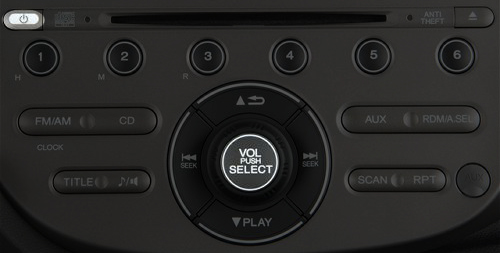
But years after my purchase the radio still confounds me. Why? It’s a stupid little thing, but it annoys me every day. In the center of the radio is a very large round button.  You push that button to turn the radio on. Very convenient. Very obvious. Works great. But when it comes time to turn it off? You might think you’d push the same button that got the jams jammin’ in the first place, but you’d be oh so wrong. No, push that same large button and you get into some other zone of time and space where you adjust fade, balance, and myriad other functions I don’t care about. To turn the unit off you must press a tiny oval button located off to the edge of the unit. It’s so NOT user-friendly. And try to frantically kill the radio when you must answer an important call whilst barreling down the interstate at 90 MPH!  (Okay, 45 MPH, it IS a Fit after all).

The large Mr. Obvious button in the center turns the radio on. The hidden ovoid button in the top left turns it off.

That’s something I would have liked to have seen in one of the reviews. I still would have bought the car, it’s a great car, but every day I want to ask some Honda designer “What the Dolittle!”

My wife and I each use Canon cameras. Even though they are very different models, the controls are very similar and we can use each other’s cameras without much trouble. But my wife’s has this “quirk” that really annoys me. When you press the Take-A-Picture-Now button, there’s a delay before the picture is actually taken. The subject can move, the photographer can breathe, the Space Shuttle can be restored to service and the picture hasn’t been committed to memory yet. My Canon however is nearly instantaneous. And in fact I’ve used other people’s cameras and noticed the same thing: some shoot instantly, some must pause and check current atmospheric conditions in Outer Slobovia before agreeing to capture the moment. And yet I’ve never seen a review or advertisement talk about this property. This is a quirk that would prevent me from buying a camera. It’s very annoying.

Similarly, I have used a friend’s Nikon camera and found that when you take a picture with that little black box, it makes so much noise that the sleeping lion you’re shooting is likely to awaken from her mid-noon purr to see if human tastes as good as tuna. I don’t like that one bit. And if you haven’t had the opportunity to make a comparison, you might never know that such a distinction existed.

Some time ago I helped a fellow woodworker assemble his brand-new table saw. We had a fun day of drinking beer, putting Tab M into Slot Q and wondering why the manufacturer had included so many extra washers that clearly we did not need. My own table saw is nearly 20 years old and while I haven’t seriously considered replacing it, while working on the setup of this new model I was struck by the fact that it had heavy plastic covers for the feet. Again, this is not a huge deal. But my saw has bare metal feet. Many do. But I noticed on my friend’s saw that it made it much more stable and if you need to move it around it moves without scraping the floor and vibrating like a 747 loaded with buffalo crashing into the Mojave. All reviews on table saws will talk about amperage, cutting capacity, accuracy, etc. But nobody told me I had a choice in feet!

My, what nice legs you have!

Household appliances need better pre-sale revelations as well. I’m a real goober when it comes to noise. I don’t like it. But when you shop for a refrigerator or vacuum sweeper or hair comb, you’ll get information about sucking power, amperage, efficiency, storage capacity, bag versus bagless — all kinds of important stuff. But they don’t tell you that this particular refrigerator will keep folks in the next zip code from getting a sound sleep because of its bubbling, gurgling, hacking and knocking noises. Why does it need to make so much noise? I have visited other people’s homes and their cold boxes purr along quietly while mine announces its presence on an hourly basis causing me to increase the volume on the TV so as not to miss the latest Life Alert advert. The vacuum may get every last crumb of particulate from the last meteor impact, but even the ear protection I wear when shooting powerful handguns cannot restore sanity to my aggravated cochlea.

Does the EnergyGuide label give me a decibel level for my refrigerator? Or does the box for the vacuum have a sound rating? They don’t. And neither Consumer Reports nor the Good Housekeeping Institute will tell you, either.

I have a DishNetwork satellite TV system. I really like it. I’ve had satellite TV from DirecTV and DishNetwork since 1993. I’ve had receivers from a variety of manufacturers. But did you know there’s a difference in how quickly channels change, based upon the receiver you have? I didn’t, either, until I’d been through a few. The RCA unit I had was the best. Key in a new channel number and as soon as you released that last number, you were watching Headline News in all its glory. But the Sony unit I had needed time to consider my channel change request before granting my wish. I guess the Sony was being my built-in conscience: “Do you REALLY want to watch Rednecks Fighting Gators, Aaron?” But that’s a feature of this equipment that I’ve never seen discussed. It’s only after you’ve made an expensive and hard-to-change-decision that you learn these things.

Most of these peeves are about minor things. But they add up! I leave work in the afternoon and the radio puts me in a bad mood. I walk in the door of the house and the fridge is rattling away, scaring the cats and goats next door. I vacuum the carpets and get a buzzing deafness in my ears. I proceed to watch a little HGTV and fall asleep waiting for the program to change away from the latest Lifetime “My Husband Is A Terrorist” flick.

I think we need a website that gives no-nonsense “I wish I knew…” information on a variety of products. I’ll make millions!

I just hope the site works the way you want it too, or you’ll write a nasty blog article about me.


Eating in public #5
The free refill

Beverage refills used to cost extra.

Yes, it’s true. Many of today’s kids don’t remember a time when drink refills weren’t free. That’s right punks, we used to pay our buck for a Coke and when that one was gone, if we were still gripped by the dusty fist of thirst, we had to, gasp, pay another buck!
I don’t know when it happened, but it sure seemed to take hold overnight. One day Coke and Pepsi were duking it out with taste-test challenges all over the country, the next day they were all but giving it way. And oh, what a blessed thing it was!
In the old days when we’d order our favorite carbonated beverage to go with our our deep-fried mushrooms, we’d get our beverage but if we wanted more we, brace for it, HAD TO PAY EXTRA! I am not lying to you. I swear, I am not! Of course you had to be really thirsty to justify the expense so I don’t think too many people did it.  I know I’d try to pace myself and ration the goodness that is a fountain-served Coca-Cola.  Then I’d turn to the free water to handle the critical thirst-quenching duties.

My experience with the restaurant carbonated beverage goes back to last days when the flavoring syrup was mixed with soda water right at the counter. The Carousel ice cream joint on Main Street in Kalamazoo, MI as well as the Spayde’s Pharmacy lunch counter in Gobles, MI held on to the old ways as long as they could.  At The Carousel a big red Coca-Cola contraption sat upon the counter and Dorothy, the proprietor, had to pour the thick Coca-Cola syrup into one section and soda water into another. (On some occasions she’d re-sell just the syrup to those suffering from a sore throat — on a doctor’s order only). She pulled the lever on the machine and the two fluids would mix and you’d have yourself a cool eight ounces to go with your hot dog (hold the relish, please).

It was pricey stuff.  I don’t remember how much Dorothy was charging for a Coke, but once your measly glass was empty, you had to pony up some more coin if you wanted another. Today the waitress at Pizza Hut brings you a brand-new 164-ounce flagon of Pepsi after you’ve only but glanced at your current supply.

I don’t know the financial model behind all of this. Of course they’ve been giving away condiments, as well as salt and pepper, all along.  So why not the beverages?  But if you’re going to go that far why not give me another three ounces of sirloin if the first eight didn’t quite fill me up?

When I put myself in the shoes of the restaurant owner I just can’t make it add up. Apart from giving away the added beverage I’ve also increased my labor costs. Wilma the waitress now has to make repeated trips back to give all the teenagers in your brood countless refills on their Mountain Dews.  That’s time Wilma can’t be upselling table five to add the grilled onions to their steak or order up a hot fudge sundae. And don’t even get me started on the increased ice expense!

Now I’m sure there are those who are cynical enough to think that they’ve just watered-down the beverages so it all works out. I’m sure that may have happened, but they couldn’t water it down too much – the soda junkies of the world would notice. At a minimum there’s some color in there and that’s gotta cost something.

The Freestyle

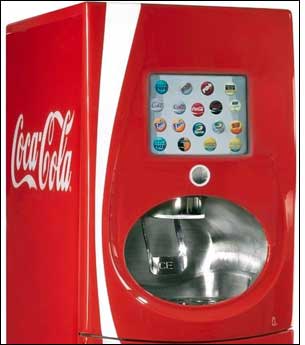
To take an even greater leap toward insanity, now there is a machine, called The Freestyle, that can dispense 100 beverages from a single spigot. From its touch-screen interface the customer mixes and blends their own crappy concoction.  A little Mountain Dew, a little Mr. Pibb, a splash of Ginger Ale, a swish of Orange Crush and a topper of Coca-Cola.  Oh yeah, this is for the better, no doubt about it.


With almost every joint offering up the free refill, I’m amazed by all of the goobers who continue to buy anything larger than the smallest vessel available. When you can get the 99-cent baby cup, and refill it to your heart’s content, why would you pay $2.95  for the Mega-Burpo size?  There’s no logic in it…other than we’re too lazy to get up and push our empty beverage cup into the lever and get another spray of beverage.

No, I don’t think we’re meant to understand this one. And after several years of studying the angles I’ve decided to give up. Instead, I’m going to accept it as one of those extra-special little things in life that make facing each day a little more joyous. Sort of like the whipped cream in a can.  Whipped cream you can shoot into your mouth until it’s hard to breathe. Oh, but that’s another story.

Eating in public #4
Waitress, there’s a fly in my pie

I’ve often heard people remark that if you could see the kitchens of most restaurants you’d never eat there. The implication is that sanitation standards are not a high priority. This may be true, but think of the things that we do in our homes. How many of you have a teenager who drinks directly from the milk jug? Enough said.

While I don’t think sterile utensils are necessarily the goal, I’ve noticed some things that, while not necessarily a risk to health, are blatantly gross.

There are of course health department standards for what can and cannot happen in a kitchen. For example, when a cook accidentally whacks off his index finger while separating a joint in a piece of fowl, it is expected that the mess be cleaned up, and the meat be disposed of (the bird that is – the appendage may be a candidate for reattachment). But there are many more disturbing things that go on behind that magical swingy door.

There often are common preparation areas that many meals travel through. Have you ever gotten a lone onion ring with your french fries? That’s an added “bonus” that you can see. Imagine what you cannot see!

Have you ever taken the time to watch the journey that a restaurant wiping rag takes? One rag with, hopefully, some cleaning solution on it, sees a lot of action.. After about thirty minutes that rag is starting to get ripe with onions, mustard, lettuce, mayo and who knows what else in it. All of those great edibles are fine when served up on a clean plate, but put them together in a rag for a couple of hours and something starts to ferment and grow that isn’t suitable for bottling under a fancy cork.

That’s bad enough. But often that very same rag is used to wipe off seating surfaces. The rag that wipes the area where many a butt parks itself is wiping the table where my naked utensils have been resting. Just imagine those rotting mayo goobers and butt residue dancing all over your fork and knife.

Most cooks need to taste their food during preparation. We all understand that. It doesn’t mean that they’re stealing food throughout the day. No, they want to make sure they’re doing it right and that what they serve is good. If the chef didn’t occasionally taste the food passing by I would suspect that said chef was dreaming about a career change to NASCAR. But using one’s fingers or the same old spoon to snag the sample is unacceptable. Those of us eating in public don’t want their phlegm and spittle added. Salt and pepper are fine, thank you very much. But I suspect we get the former nonetheless.

I’m not a hair-toucher. Okay, I don’t have hair. But if I did, I wouldn’t be touching it whilst working with food. Hair is greasy and oily. Especially around my food I don’t want the cook’s nor server’s hair cooties. So think about those little scratches made to their itches or the re-arrangements to their coifs. That’s getting on their hands and then getting on the utensils and food. Think of the grossest person you’ll see today. Imagine dragging a fork through that person’s hair before using it to take a mouthful of creamy cole slaw. Doesn’t evoke images of grandma’s kitchen now does it? Unless your grandma was a greasy slob in which case you’ve probably got more important issues.

Hair causes yet another problem that most people overlook. I’ve got nothing against long hair but servers need to think about where their hair is when they hoist that big serving tray up on their shoulders. Time and time again I see them heft the big load of plates up there only to have the hair on the side of their head drag through the food. I’d say that most of the hair that we find in our food didn’t come from Stan in the kitchen. It came from Stella’s pony tail.

The at-table refill procedure is, on the surface, a great advance in customer service. The at-table refill entails the server bringing a pitcher to the table to refill your beverage. On the face of it this isn’t a bad way to go. If nothing else they limit the number of beverage containers that must be run through the dishwashing process. However the pourer is often not paying attention to straw location. Think about where the mouth-end of the straw is during the refill. Often it’s bouncing around the spout of the pitcher.  That means that all of the cooties from hundreds of straws are now crawling around near the spout of the pitcher. Those cooties are desperate for a new home on your lips.

I’m pretty sure I’ve just technically Frenched the tattooed trucker in the corner by sipping on my straw.

Eating in public #3
The tipping point

I was once informed that the word “tip” was an acronym that stood for “To Improve Performance.”  I suppose we, in the dining public, would leave funds on the table to induce the individual to perform well. They know that if they don’t do a good job they won’t get much, or maybe nothing at all.

Perhaps it’s okay to look at it that way. But I prefer to look at a tip as payment for service.

I’ve never waited a table in my life. That’s not counting the occasional family gathering when mom’s evil eye and swift kick to the knee indicated that it was my turn to clear the table. I have, however, known many a food service professional. They all have a story to tell but the one common thread is that they don’t get paid squat. As of this writing, the federal minimum wage for wait staff is $2.13 per hour. You didn’t know that, did you? But it’s true. Not that the “regular” federal minimum wage of around $7.00 an hour would keep any single person’s cupboard stocked with steak and Starbucks.

That couple of bucks an hour that they get paid by the establishment scarcely pays for their toothpaste and People magazine bills. When you leave a tip you aren’t doing them any favors – you’re compensating them for the work that they’ve done on your behalf. Stiff them or be stingy and, in my book anyway, you’d better have a good reason. You can disagree with the system, but that’s just the way it works.

Whenever I set my size 13s in a sit-down public eating establishment, I mentally give the service person a 20% tip. If they do a good job, they’re getting the 20% (and it probably will be rounded up just a bit to save myself the mathematical tension).

Notice that I said a good job. They don’t have to go above and beyond the call of duty — they just have to do a good job. Before they introduce themselves, they’re getting 20%.

I start to deduct from the 20% for deficiencies. I don’t keep a spreadsheet going and the deductions aren’t scientific but, for example, if my beverage is not regularly re-filled, I’m going down to 15%. That’s quite a big drop I admit.  But there isn’t much work involved in keeping a glass of water filled. And in my experience if the beverage isn’t attended to, then not much else is, either.

After food is delivered, whether it be the opening salad or soup, the main course or dessert, I expect my server to check back with me. They should make sure I got what I ordered, that the food is acceptable and that there’s not a large piece of asphalt in my mashed potatoes. Failure to check back will result in a reduction.

I’m also looking for friendly service. It’s a bonus if I’m entertained and leave the public place happier than when I entered.  Make me laugh out loud and you’re destined for extra tippage. I want some semblance of a smile and to be treated nicely. This is important because on nearly any given shift the service folks are putting up with rude customers like you. Customers who can’t make up their minds, customers who complain about everything and colleagues in the kitchen who aim to make life as miserable as possible. Plus they’re on their feet all day. So we shouldn’t expect refrains of “Happy-Happy, Joy-Joy”,  but I do expect a nice disposition.

The server always should offer dessert. Even if I’ve just had a hot-dog. Even if I’ve just consumed inhuman quantities of chow. Offer me dessert. If they don’t, I’m going to feel like I’m  being herded like a bovine on my way to the next pasture. So they’ll take a deduction on the tip. Plus they’ll lose the addition of the dessert to the tip calculating base.

Finally, the dirty dishes need to be removed regularly. Dirty dishes piling up is not appetizing and it also restricts freedom of movement whilst trying to ingest foodage. On one hand I will argue that it isn’t the job of the server to deal with the dirties, but in establishments where it is, their performance in this area will be reflected in the tip.

All of that said, it’s very rare that I tip below 10%.

I try to take the atmosphere into account. If it’s clear a bad day is being had by all, I’m not going to add to it by withholding coin. We’re all human and none of us is on the top of our game all the time.

When I was a single dude I took full advantage of the tipping process in order to arrive at the the“getting to know you” department. Some might liken it to prostitution but I was simply rewarding a fine-looking young lady for  being so. I mean, if I can’t express that I’m a decent, up-standing citizen by leaving a 200% tip, then what’s the point of living in a free-market economy? I don’t know.

Now don’t think for a moment that female service professionals don’t understand that this goes on. They pander to it, believe me. The staged casualness of their hand on your shoulder? The endearing phrases such as “Can I get you a refill on that honey?” when she’s not talking about bee-juice? The revealing and evocotive garments? The questions to which the answers hold to meaning? They’re all there to distract the male customer from his wallet.

Of course it’s all fake and just meant to provide a pleasant atmopshere. One that will have us men leaving a decent tip even though the order destined for table 17 ended up in front of us in error. And even though we didn’t complain as we ate the liver, onions and wind chime casserole.

Standing around and waiting on us is hard work.  Even in the simplest of joints, just watch what goes on.  Dealing with the public is horrendous on a good day.  If you can’t afford or are unwilling to offer up the 20%, get a candy bar at the gas station and keep on down the road.

These folks work hard.

Their wages are low.

They put up with a lot of crap.

They put up with you.

Pay ’em.